

Industrial Ethernet Network for a Large-Scale Solar Power Plant in Saudi Arabia

A large-scale solar power project in Saudi Arabia required a network connecting distributed control and monitoring equipment to a central management system. EtherWAN led the network planning and system design, developing a three-tier industrial Ethernet architecture comprising core, aggregation, and access layers. The design combines a 10GbE fiber backbone, OSPF dynamic routing, and network redundancy to support more than 200 industrial networking devices in a single area and accommodate future expansion.
Project Background and Network Challenges
Control systems, monitoring equipment, and power plant management platforms are distributed across different areas of the solar power plant. Field data must be continuously transmitted to the central control center for use by supervisory control and data acquisition (SCADA) and energy management systems. Networking equipment must also withstand the demanding conditions of Saudi Arabia’s hot desert environment.
With more than 200 industrial networking devices deployed in a single area, the network design needed to address large-scale device connectivity, communication between areas, network redundancy, and the addition of future generation areas.
EtherWAN’s Three-Tier Industrial Ethernet Network Design
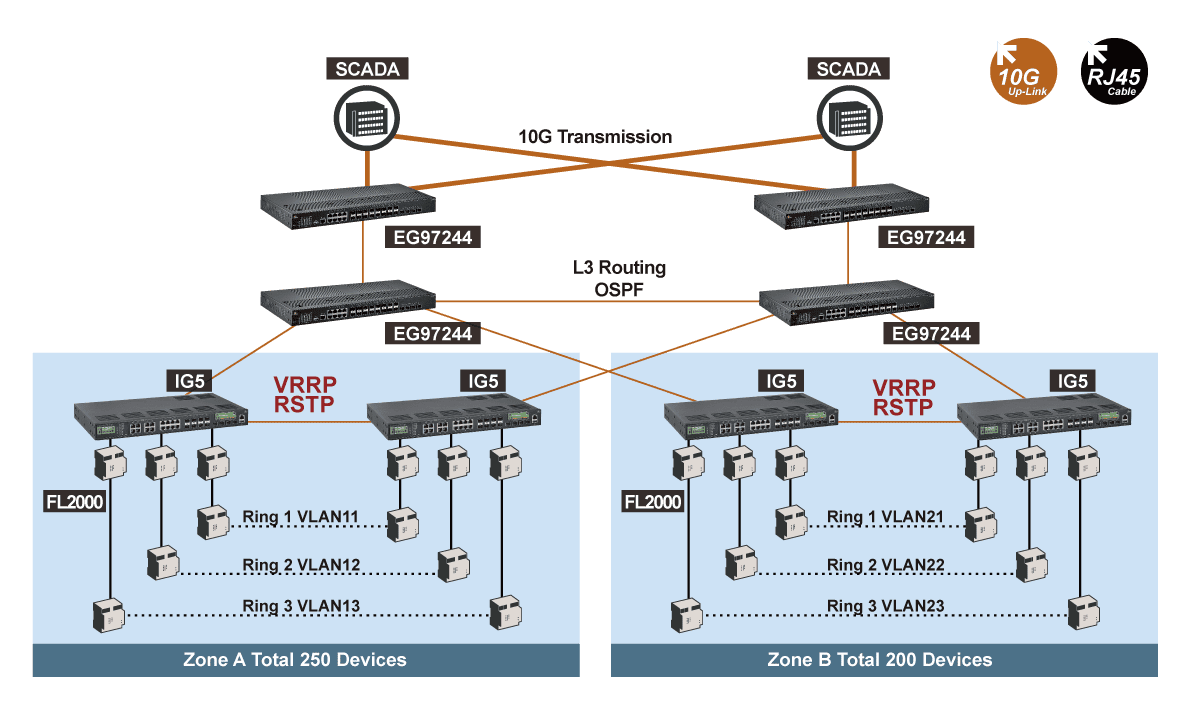
EtherWAN led the project’s network planning and system design in collaboration with the Phoenix Contact Group and a system integrator. Local teams carried out equipment installation, on-site deployment, and system configuration. The network was organized into three layers, each with a defined role: core, aggregation, and access.
Core Layer: A 10GbE Fiber Backbone to the Central Control Center
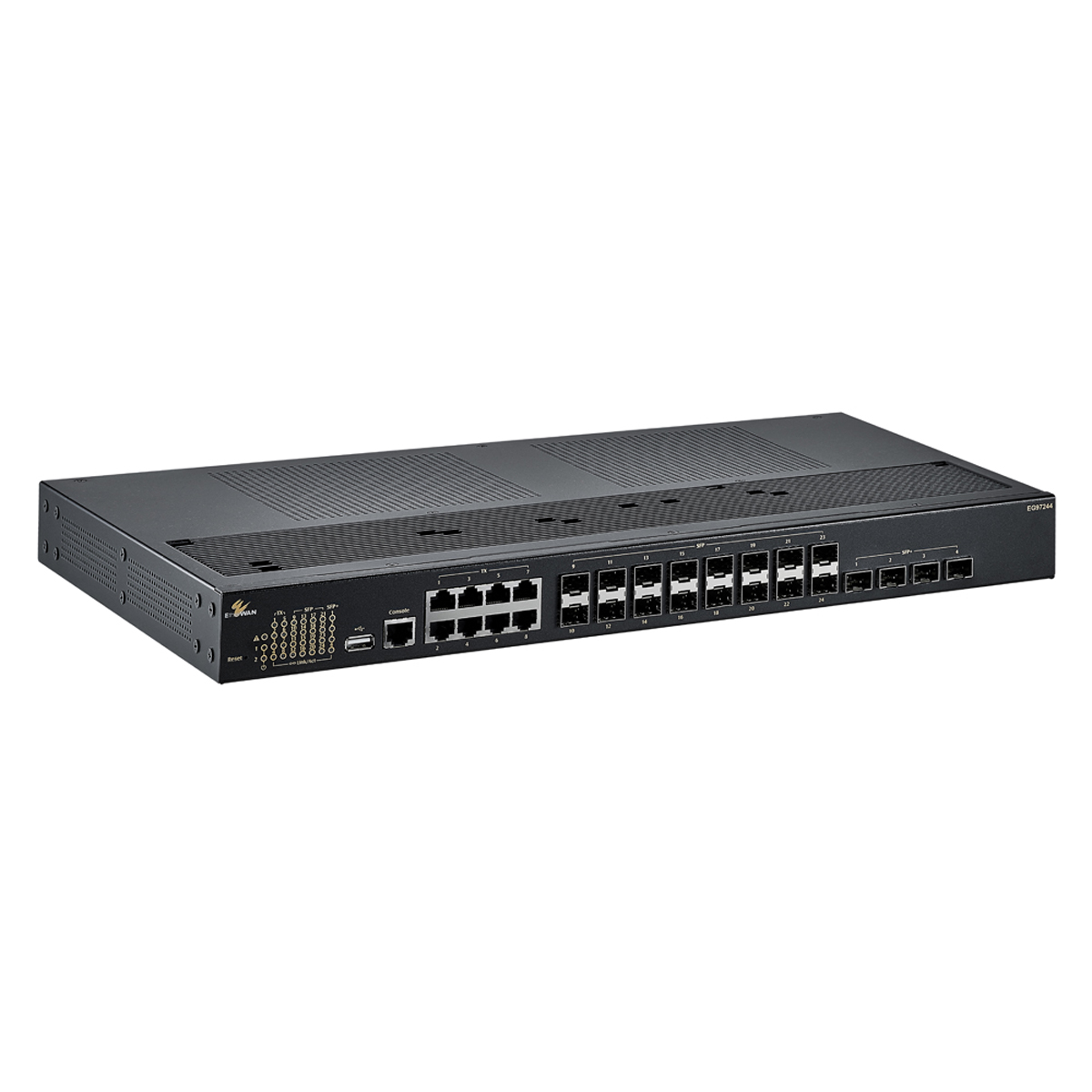
The core layer uses EtherWAN EG97000 Series Layer 3 industrial Ethernet switches to form the backbone connecting the plant’s generation areas. Through 10GbE fiber uplinks, field data from each area is transmitted to the central control center for use by SCADA and power plant management systems.
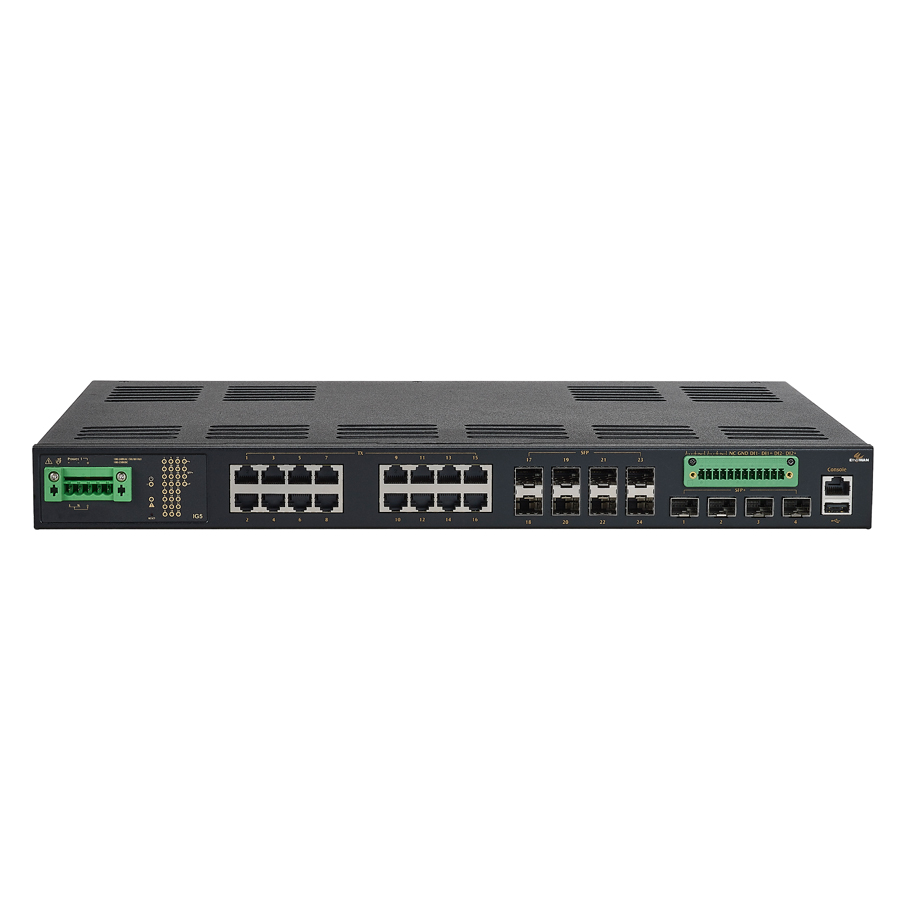
Explore the related product: EG97244 Series
Aggregation Layer: Routing Between Plant Areas
The aggregation layer combines EG97000 Series and IG5 Series switches to connect individual generation areas to the core network. Open Shortest Path First (OSPF) dynamic routing manages communication paths between areas. Dividing the network into distinct areas helps separate traffic and limit the scope of disruptions, while providing flexibility for future expansion.
Explore the related product: IG5 Rack Series
Access Layer: Field Device Connectivity and Redundant Paths
The access layer uses EtherWAN IG5 Series switches alongside Phoenix Contact FL2000 Series industrial Ethernet switches to connect field control and monitoring equipment. The overall network design uses Virtual Router Redundancy Protocol (VRRP) for gateway redundancy and Rapid Spanning Tree Protocol (RSTP) for loop prevention and redundant paths, helping reduce the impact of device or link failures on communication.
Deployment Outcomes and Future Expansion
The three-tier architecture connects distributed field equipment to the central management system and establishes a consistent network design for an area with more than 200 industrial networking devices. Defined responsibilities across the core, aggregation, and access layers provide a clear framework for connectivity, routing, and redundancy.
As new generation areas are added, the plant operator can use the existing architecture as a basis for planning connections, routing, and redundancy. This project demonstrates how EtherWAN combines industrial Ethernet switches, a 10GbE fiber backbone, and network redundancy to address the connectivity and expansion requirements of a large-scale solar power plant.